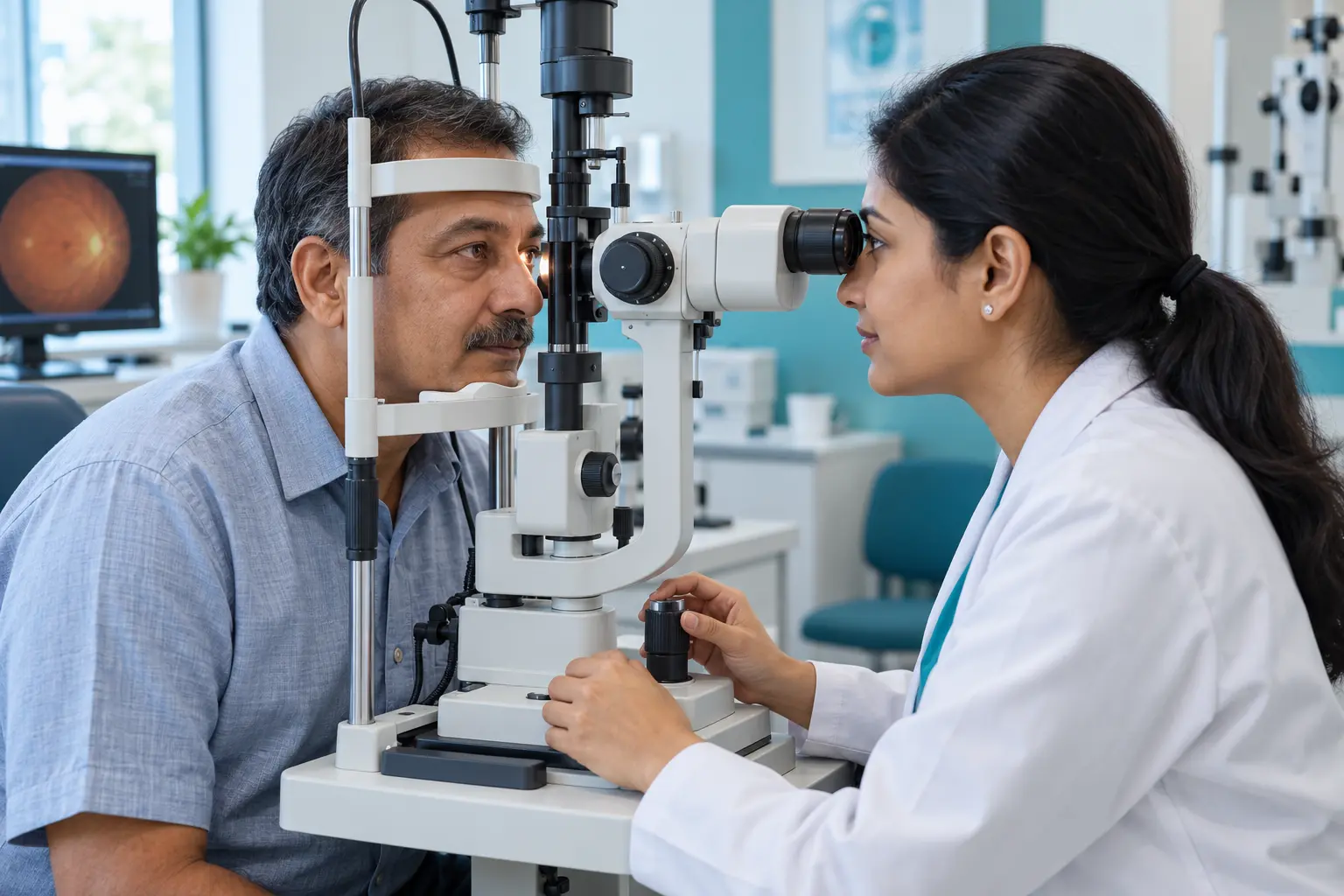
Yes. Diabetes can begin affecting the retina before you notice blurred vision or any other eye symptom.
This is why being able to read clearly or see distant objects does not necessarily confirm that the retina is healthy. A comprehensive dilated eye examination can detect early diabetic changes that may not be visible during an ordinary vision check.
Early detection does not mean that everyone will need immediate treatment. Many patients only require regular monitoring and good management of their diabetes, blood pressure and cholesterol. The important step is to examine the retina before vision is affected.
What Is Diabetic Retinopathy?
The retina is the light-sensitive layer at the back of the eye. It receives light and sends visual information to the brain.
Diabetes can gradually damage the small blood vessels that supply the retina. These vessels may become blocked, leak fluid or bleed. In more advanced disease, the retina may develop abnormal new blood vessels that are fragile and can bleed easily.
This condition is called diabetic retinopathy.
Diabetic retinopathy may affect one or both eyes. Its severity can also differ between the two eyes.
Why Can the Damage Go Unnoticed?
The early stages of diabetic retinopathy often cause no symptoms. A person may have normal-looking vision even though small blood-vessel changes have started inside the retina.
Vision is more likely to become affected when:
- Fluid leaks into the macula, which provides sharp central vision
- Bleeding occurs inside the eye
- Abnormal blood vessels develop
- Scar tissue pulls on the retina
- Another diabetes-related eye condition is present
Waiting for symptoms can allow the condition to progress before it is discovered. Regular retinal examinations are therefore important even when your spectacles seem satisfactory and your vision feels normal.
Possible Symptoms in Later Stages
When diabetic eye disease begins affecting vision, symptoms may include:
- Gradually increasing blurred vision
- Difficulty reading or recognising faces
- Straight lines appearing distorted
- Dark spots, threads or cobweb-like floaters
- Poor vision in dim light
- Colours appearing less clear
- Empty, blurred or dark areas in the visual field
- Sudden reduction of vision if bleeding occurs
These symptoms are not specific to diabetic retinopathy. Cataracts, glaucoma, retinal problems and temporary changes in blood glucose can also affect vision. An eye examination is required to determine the cause.
Who Has a Higher Risk?
Anyone with diabetes can develop diabetic retinopathy. Risk generally increases with the length of time a person has had diabetes.
Other factors that may increase the likelihood or progression of retinal damage include:
- Blood glucose remaining above the individual target
- High blood pressure
- High cholesterol
- Kidney disease associated with diabetes
- Smoking or tobacco use
- Pregnancy in someone who already has diabetes
- Missing recommended diabetes or eye check-ups
Having one or more risk factors does not confirm that retinopathy is present. Similarly, well-controlled diabetes lowers the risk but does not remove it completely.
How Often Should Someone With Diabetes Have an Eye Examination?
Many clinical guidelines advise people with diabetes to have regular comprehensive dilated eye examinations, commonly at least once a year. However, the correct timing is individual.
Your ophthalmologist may recommend more frequent examinations if:
- Retinal changes have already been detected
- Blood glucose or blood pressure has been difficult to control
- You are experiencing a change in vision
- You are pregnant and had diabetes before pregnancy
- You have kidney disease or another diabetes-related complication
- Previous retinal findings require closer observation
People with newly diagnosed type 2 diabetes should discuss arranging a retinal examination because diabetes may have been present before it was diagnosed. For type 1 diabetes, the timing of the first retinal examination may depend on age and the duration of the condition.
Follow the schedule recommended by your ophthalmologist and diabetes-care doctor rather than relying on a fixed interval from a general article.
Is a Spectacle-Power Test Enough?
A test for spectacle power checks how clearly you can see and whether lenses improve your vision. It does not always provide a complete assessment of the retina.
A diabetic eye assessment may involve:
- Checking visual sharpness
- Measuring eye pressure
- Using eye drops to widen the pupils
- Examining the retina and optic nerve
- Taking photographs of the back of the eye
- Optical coherence tomography, or OCT, when clinically indicated
OCT is a scan that creates detailed cross-sectional images of the retina. It may help identify swelling or structural changes in the macula.
In selected cases, additional imaging may be recommended to study retinal blood vessels or guide treatment planning.
Practical Steps That May Help Protect Your Vision
Diabetic retinopathy cannot be prevented in every case, but managing diabetes and related health conditions can reduce the risk or slow its progression.
Helpful steps include:
- Follow your diabetes treatment plan. Take insulin or other medicines as prescribed and attend recommended medical reviews.
- Monitor blood glucose as advised. Work with your diabetes-care doctor to establish an appropriate personal target.
- Manage blood pressure and cholesterol. Both can influence the risk of retinal blood-vessel damage.
- Avoid smoking and tobacco. Ask a qualified healthcare professional for support if you need help stopping.
- Attend retinal examinations even without symptoms. Good vision is not a substitute for examining the retina.
- Report new visual changes promptly. Do not wait until your next routine appointment if vision suddenly changes.
Do not start supplements, herbal products or medicated eye drops to treat diabetic retinopathy without medical advice. Eye drops placed on the surface of the eye do not repair damaged retinal blood vessels.
When to Seek Urgent Eye Care
Seek prompt ophthalmic or emergency medical attention if you experience:
- Sudden loss or marked reduction of vision
- A sudden shower of dark floaters
- New flashes of light
- A curtain or shadow moving across your vision
- Sudden severe blurring in one or both eyes
- Severe eye pain, redness, headache or vomiting
- Vision changes following an eye injury
These symptoms may have several causes and cannot be safely diagnosed at home. Do not wait for a routine appointment if vision changes suddenly.
How Is Diabetic Retinopathy Treated?
Treatment depends on the stage of the condition, whether the macula is swollen and whether vision is threatened.
Monitoring and diabetes management
Early retinal changes may not require an eye procedure. The ophthalmologist may recommend regular monitoring along with better management of blood glucose, blood pressure and cholesterol.
Eye injections
Medicines injected into the eye may be considered for diabetic macular swelling or certain stages of retinopathy. The medicine, number of injections and treatment interval must be decided by a qualified ophthalmologist after examination.
Laser treatment
Retinal laser treatment may be considered to reduce the risk of further vision loss in selected cases. It is not appropriate for every patient or every stage of diabetic retinopathy.
Retinal surgery
Advanced bleeding, scar tissue or retinal detachment may require specialist retinal surgery.
These treatments cannot guarantee that lost vision will return. Their main purpose is often to control leakage, reduce swelling or prevent further retinal damage. Treatment suitability must be determined individually.
Frequently Asked Questions
1. My vision is clear. Do I still need a retinal examination?
Yes. Early diabetic retinopathy may not cause symptoms. Examining the retina can reveal changes before you notice a problem with your vision.
2. Does good blood-sugar control completely prevent diabetic retinopathy?
Good control can reduce the risk and may slow progression, but it cannot guarantee that retinopathy will never develop. Regular eye examinations remain important.
3. Can changing my spectacles treat diabetic retinopathy?
New spectacles may improve vision caused by a refractive-power change, but they do not treat damaged or leaking retinal blood vessels.
4. Can diabetic retinopathy be cured?
Some retinal changes can be monitored or treated, and swelling may improve in suitable cases. However, established retinal damage may not be fully reversible. Early detection offers a better opportunity to protect remaining vision.
Arrange a Diabetic Eye Examination in Saharanpur
If you have diabetes—or have noticed a diabetes-related change in vision—you may arrange a comprehensive eye and retina examination at Eye Point Hospital, Saharanpur.
Consultations are available with Dr. Safeena Tabassum, MBBS, MS (AMU), Eye Surgeon and Gold Medalist, with 15 years in healthcare. Examination findings are used to advise whether routine monitoring, further testing or referral for specialised retinal treatment may be appropriate.
Address:
39, Ayodhyapuram, Mahipura, Near Prankur Hospital, Dehradun Road, Saharanpur, U.P. 247001
Phone and WhatsApp:
+91 79762 01232
Consultation hours:
Monday–Wednesday: 9:00 AM–5:00 PM
Thursday: 2:00 PM–5:00 PM
Friday–Saturday: 9:00 AM–5:00 PM
Sunday: Closed
Please confirm appointment availability before visiting.
This article provides general information and does not replace an individual eye examination or medical advice.